Edible Magazine Feature
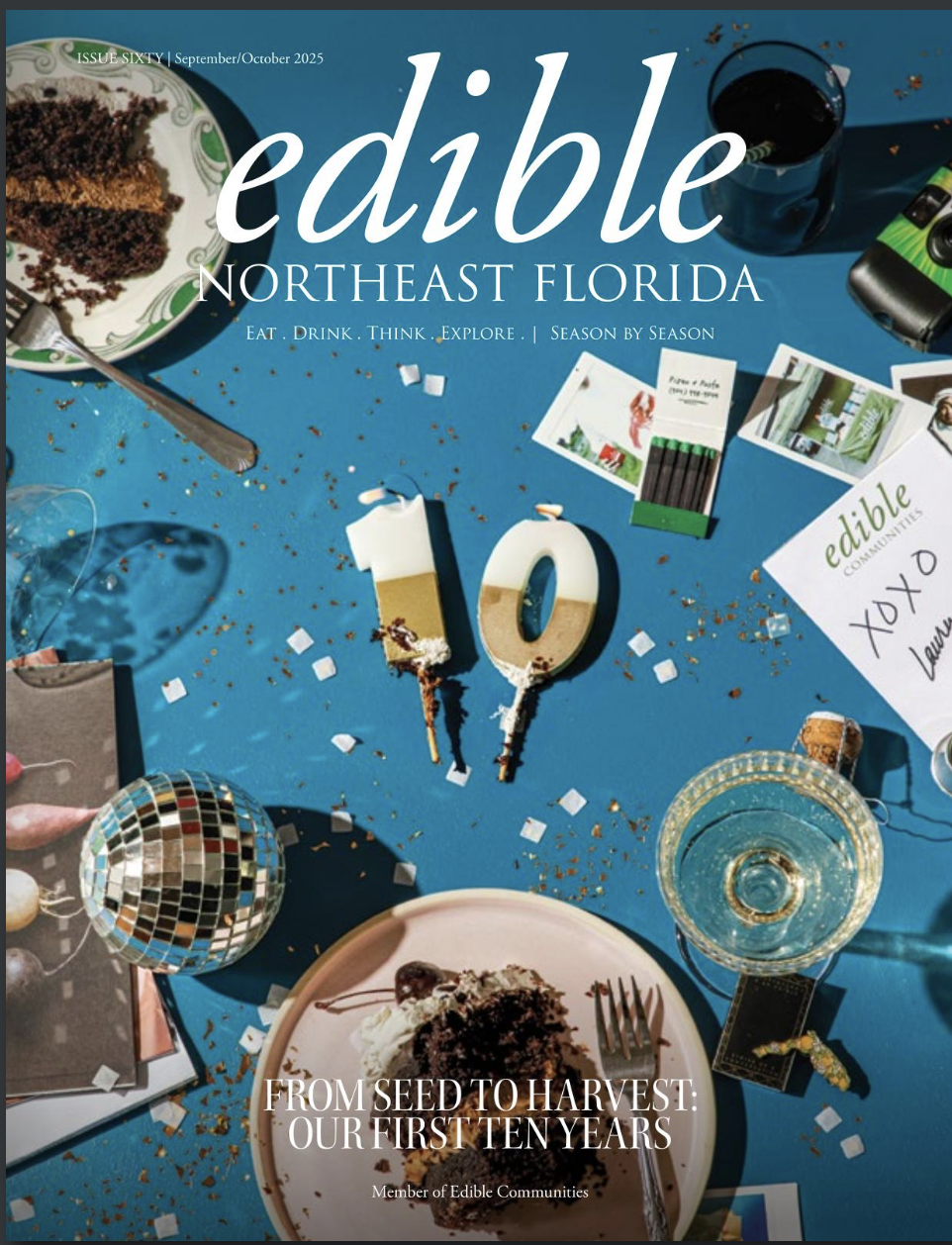
A few months ago we were invited to write an article for Edible Magazine about our front yard garden. Not the perfect garden. Not the magazine garden. Just the ordinary one outside our front door. If you’ve ever heard the song Little Boxes on the Hillside, you know the feeling. Rows of houses. Lawns trimmed just so. Landscapes that look almost identical from one yard to the next. The song was written in the early 1960s as a gentle protest about suburban sameness, and somehow it still feels surprisingly relevant today. But a yard doesn’t have to stay that way. Through our work at Bluebird Growers, Nick and I spend most of our days helping people rethink what their landscapes can be. Instead of lawns that simply exist to be maintained, we design gardens that are alive — places where pollinators gather, herbs grow within reach of the kitchen, and the seasons actually show themselves. What felt most meaningful to write about for Edible wasn’t a client garden, though. It was our own. We live in a rented home in St. Johns County, in one of those quiet neighborhoods where lawns are trimmed neatly and irrigation runs like clockwork. At first glance it looks like any other suburban block. But slowly, little by little, we started asking a question: What if even this yard could grow food? The answer has been an ongoing experiment. Our article in Edible Magazine tells that story—how a small, HOA-regulated front yard became a place for food, pollinators, and a different way of thinking about what suburban landscapes can be. If you’d like to read the full piece, you can find it here, or read it below.
Little boxes on the hillside,
Little boxes made of ticky-tacky,
Little boxes on the hillside,
Little boxes all the same…”
Most of us remember the tune from Weeds, a mid-2000s satire of suburbia. Manicured lawns, beige-on-beige conformity, homes that looked like copy-paste jobs. It was funny because it was true. But the song actually dates back to 1962, written by folk singer Malvina Reynolds—a protest tune disguised as a jingle. And sixty years later, not much has changed.
But what if a front yard wasn’t just something to maintain, but a space with purpose? A place that offered food, habitat, and seasonal beauty alongside curb appeal? That shift in perspective changed how we viewed even our own yard. We stopped seeing it as something to manage and began treating it as something alive.
Fittingly, my husband Nick and I run Bluebird Growers, a small horticulture-forward landscaping business in Northeast Florida. We focus on sustainable, native, and edible gardens—plantings that support both people and pollinators. We’ve helped homeowners rethink what a yard can be, but when it came to our own front yard (at a home we rent), the project felt different. Without the freedom of ownership, we leaned on ingenuity. Could a small, HOA-regulated rental lawn grow food, invite wildlife, and shift the way we lived?
We decided to find out.
You see, we live in St. Johns County, where lawns are often better regulated than ecosystems. Our neighborhood is quiet and tidy. Irrigation systems run on timers, hedges are trimmed to code, and deviations tend to raise eyebrows. But beneath the order lies soil, and soil is full of possibility, especially in Florida’s generous growing zone.
We started small, expanding beds slowly. We improved the soil with mushroom compost, pine fines, and alfalfa. Then came the plants: native pollinator magnets like salvia and coreopsis, mixed with herbs, greens, and edible blooms—parsley, fennel, lemon thyme, arugula, society garlic, and chives. We tucked in papalo and roselle, grew pumpkins by accident, and added fig trees and bananas along the sunny side yard. Our choices reflect what thrives in Zone 9B’s subtropical climate, plants that can take the heat, bounce back after storms, and give back more than they take. The garden continues to evolve. It’s part design, part improvisation, and completely alive.
There’s a misconception that ecological gardening is chaotic or high-maintenance. In truth, it often asks less of you than a lawn. No pesticides or synthetic fertilizers. Less mowing, less watering. Just healthy soil, thoughtful plant selection, and time. This once plain patch of red mulch and boxwoods has become a living HOA-approved classroom. A reminder that you don’t need ideal conditions or acres of land to grow something worthwhile. Because even in a row of little boxes, one yard will always find a way to misbehave.
Alexandra is a writer, film photographer, and co-owner of Bluebird Growers, a small landscaping business in North Florida. She lives in St. Augustine with Nick, Henry, Clementine, Marigold, Suzy, Rufus, Effie and a yard full of pollinators.