Writing for Jacksonville Magazine
So I'm working on an essay. It's a personal piece, and a wee bit of an informational blurb, for Jacksonville Magazine. The piece is called “Living in Suburbia While Growing a Misbehaved Native Natural Garden.” I wrote a little about this topic for Edible Magazine, but this time I want to explore it from a more personal standpoint. Because the reality is, I'm not the horticulture expert. Nick is. He's the brains behind the production of Bluebird Growers, while I take what he does and create a story from it, whether through photography or words. But for this piece, I'm simply a mom who wants a productive, pretty landscape for her family to enjoy.
Nick and I have always been interested in connecting our two worlds and our different sets of skills. Horticulture and art. Expertise and storytelling. Getting the work done and showcasing it beautifully. Reality and creativity. Two different people with different ways of seeing the world. Although I should say that Nick is also incredibly creative. Obviously. He designs all of our gardens and enjoys and respects art just as much as I do. He even enjoys photography, although it's more of a hobby for him than a vocation.
I digress. Back to the article.
We're not exactly your typical suburban folks. If I'm being honest, we probably would have chosen to live in a more historic part of Jacksonville, like San Marco, or somewhere along the beaches. There's a real sense of place in those communities. History, character, and an established sense of community. Where we live in St. Johns County, everything is brand new. Fill dirt, repetitive landscaping, sod, shopping centers, Publix, storage facilities, and an oil change station on every corner. They're even building a Taco Bell down the road! That's what it feels like, anyway. We've only lived here for three and a half years, and much of the surrounding area near Beachwalk and Beacon Lake was developed within the last decade. There's not a lot of character here. Yet. The trees and landscapes aren't particularly mature. Yet. Our neighborhood is part of a recent wave of development in northern St. Johns County. Much of the surrounding Twin Creeks property was once managed pine forest, with wetlands woven throughout the landscape. Before the houses, concrete, retention ponds, and shopping centers, this land looked very different. Long before the pine plantations and suburban development, Indigenous communities lived in this region for thousands of years. Over time, the landscape changed. From native ecosystems to managed forests, and eventually to the suburban neighborhoods we see today. Different people, different generations, and different ideas about what the land should be.
And now here we are.
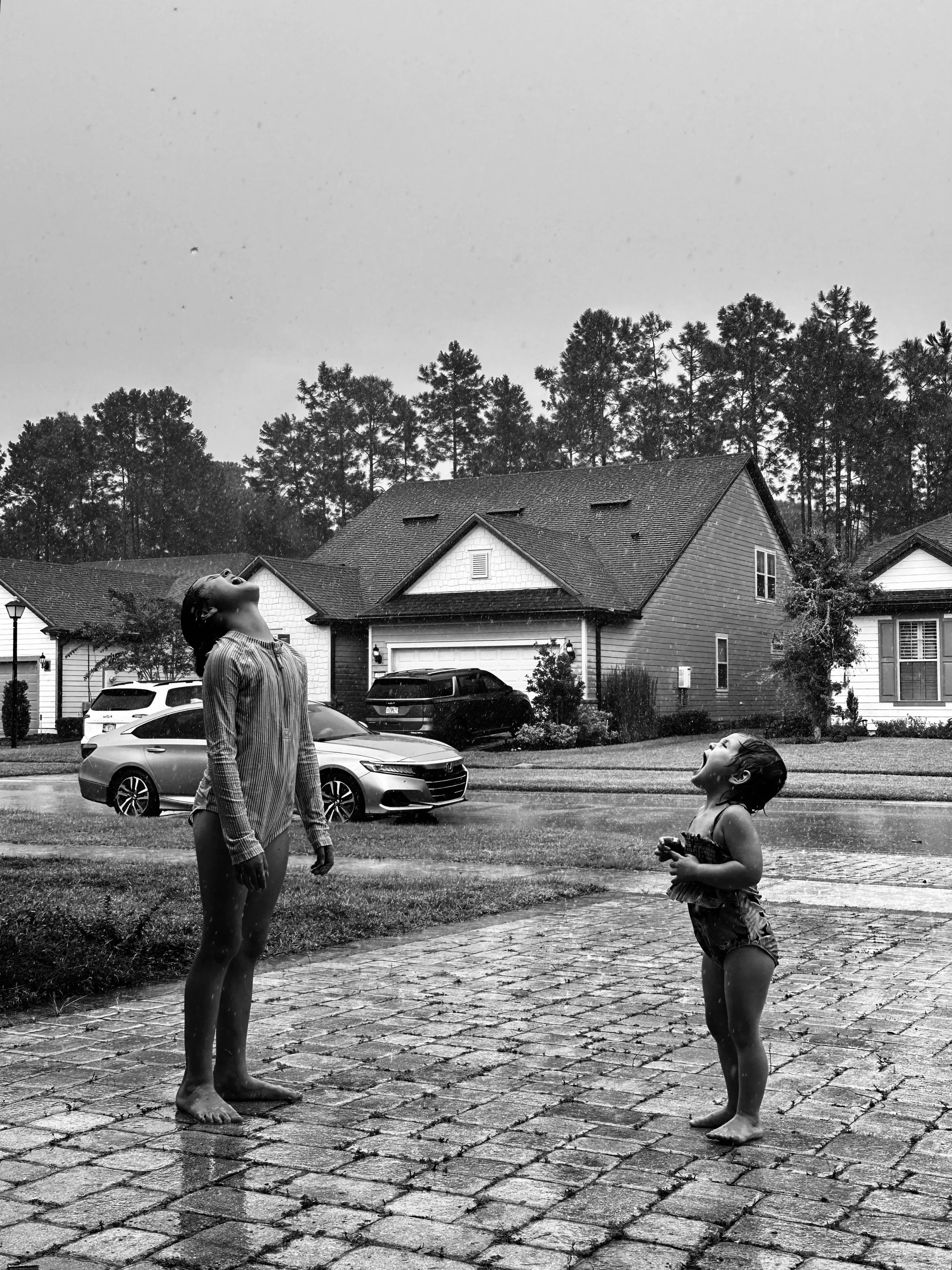
When we moved here three and a half years ago, I was 36 weeks pregnant with our daughter Marigold. I remember driving into the neighborhood feeling uncomfortable and thinking, “This just isn't us.” While there's absolutely nothing wrong with a planned suburban neighborhood, that song from Weeds immediately started playing in my head. Little boxes on the hillside, little boxes made of ticky-tacky, and they all look just the same. And I haven't gotten the tune out of my head yet. However, life led us here for many different personal reasons. And while we don't know what the future holds, we're making the best of what we have now. We've dabbled in homeschooling, and now our daughter is enrolled in our neighborhood public school. She's a bike ride away, and that is a dream for us. Watching her make close friends and explore the neighborhood on her own bicycle, with her own volition and authority, is a beautiful, sacred thing. So while this neighborhood may not have been what we imagined for ourselves, it's become a place where our children can grow, explore, and find their own sense of belonging. And perhaps we can do the same.
Which brings me back to the land.
For generations, people have made decisions about what this land should be. And now we're standing on our tiny little parcel of itchy, scratchy St. Augustine grass, asking ourselves the very same question.
What do we do with this little piece of land of ours? How can we make it feel like a garden? How can we create a landscape that supports nature when chemicals are being sprayed constantly for practically every bug imaginable? How can we make something beautiful, productive, and ecologically meaningful within the boundaries of a suburban neighborhood? As it turns out, you can do quite a bit with your own little parcel of land, even when you're renting. More coming! :)